Best Foods for Fat Loss (Beginner-Friendly Guide)
There is no single food that burns fat. What actually helps is a pattern of eating that keeps you full on fewer calories, protects muscle, and is easy to repeat when you are tired and busy.
On this page10 sections
That pattern has a surprisingly short list of ingredients: protein at every meal, plenty of vegetables and fruit, fibre-rich carbohydrates, and fats that you measure rather than pour. This guide explains why each of those matters, what the research actually shows, and how to put them on a plate without weighing every gram.
Key Takeaways
- "Best" means filling per calorie, not low-calorie in isolation: in a satiety-index study of 38 foods, boiled potatoes scored 323 against white bread's 100, while a croissant scored 47
- Protein content, fibre content and water content all correlated with greater fullness; fat content correlated with less
- Spreading protein evenly across three meals reduced women's intake of energy-dense snack foods in a 16-week randomised trial
- Wholegrain rye did not produce more weight loss than refined wheat in a 12-week trial, but it lowered CRP — so choose wholegrains for health, not for a faster scale
- Nuts are not a fat-loss enemy: a meta-analysis of 86 trials found no adverse effect on body weight
What "best" actually means
Hunger is the main reason diets fail, so the most useful question about any food is: how full does it leave you for the calories it costs? Researchers have measured this directly. In a classic study, 38 common foods were served in isoenergetic 1,000 kJ (240 kcal) portions and rated for fullness over two hours, after which participants ate freely.
The differences were large. Boiled potatoes produced the highest satiety score (323% of white bread), while a croissant produced the lowest (47%). Most foods scored above white bread. Satiety correlated positively with the serving weight of the food, its protein, fibre and water content, and negatively with fat content and palatability.
That gives a practical rule: foods that are heavy, watery, fibrous and protein-rich tend to fill you up. Foods that are dry, fatty and extremely tasty tend to be easy to overeat. This is not moral judgement — it is physiology, and it explains why "just eat less" fails when the food is designed to be moreish.
1. Protein at every meal
Protein is the most reliably satiating macronutrient and the one that helps preserve lean mass during a deficit. The practical question is not "how much protein is optimal" but "where is it coming from at breakfast, lunch and dinner".
A 16-week randomised trial in 44 women with overweight or obesity compared two patterns during weight loss: protein spread evenly across three meals, versus most protein eaten at dinner. The even group gave energy-dense snack foods a lower reinforcement value and ate less of them when offered (44.3 g versus 62.0 g). The mechanism is not fully established, but the behavioural result is useful: front-loading some protein earlier in the day may make evening snacking less compelling.
A larger cohort analysis of 1,518 adults found that the proportion of energy coming from protein was inversely associated with total energy intake. When protein's share was diluted by high fat and refined carbohydrate — mainly discretionary foods — people ate more and gained more weight over 12 months. That is an association, not proof of cause, but it points the same direction as the trial data.
Practical sources: eggs, plain Greek yogurt, cottage cheese, milk, fish, chicken, lean meat, tofu, tempeh, lentils, beans, peas, and soy products. Tinned fish and eggs are usually the cheapest reliable options.
For portion guidance, see protein intake for body recomposition and nutrition for fat loss.
2. Vegetables and fruit: volume without many calories
Vegetables and fruit carry water and fibre, which is exactly the combination that scored well in the satiety study. They also add micronutrients that a calorie-restricted diet can easily miss.
The NHS recommends at least five portions a day, where one portion is about 80 g of fresh, canned or frozen produce, 80 g of beans or pulses, 30 g of dried fruit, or a 150 ml glass of juice. Fruit juice counts as a maximum of one portion because it is sugary and can damage teeth — whole fruit is a better default because it takes longer to eat and contains more fibre.
Practical approach: aim for half the plate to be vegetables at lunch and dinner, and use fruit as the default dessert or snack. Frozen vegetables are nutritionally comparable, cheaper, and reduce waste because you use only what you need.
Related: fibre for fat loss and healthy snacks for fat loss.
3. High-fibre carbohydrates, chosen for health rather than speed
Carbohydrates are not the problem; the form matters. The NHS Eatwell guidance recommends basing meals on higher-fibre starchy foods such as potatoes with the skin, wholemeal bread, brown rice, wholewheat pasta and oats.
A 2026 systematic review of 48 randomised crossover studies found that higher cereal-fibre intake improved subjective satiety compared with low-fibre controls, but had limited effects on how much people ate at the next meal. Rye and oat fibres performed best; wheat and barley fibres, resistant starch and soluble corn fibre showed weaker effects.
Two findings keep this honest. First, a 12-week randomised trial of 255 adults on hypocaloric diets found wholegrain rye produced 3.2 kg loss versus 2.9 kg for refined wheat — not a significant difference. Rye did lower CRP by 17%, suggesting a real anti-inflammatory benefit. Second, a small crossover study found that bread with 2.5 times more fibre did not change hunger or fullness ratings at all.
What this means: choose wholegrains because they are better for long-term health and generally more filling per calorie, not because they will accelerate the scale. Keep portions in line with your energy needs.
4. Nuts, dairy and other fats that pull their weight
Fat is calorie-dense, so it is easy to overdo — but cutting it to near zero makes food bland and often pushes people toward refined carbohydrates. The goal is to choose fats that come packaged with fibre, protein or micronutrients.
Nuts. A systematic review and meta-analysis of six prospective cohorts (569,910 participants) and 86 randomised trials (5,873 participants) found nuts were associated with a lower incidence of overweight or obesity (RR 0.93) and had no adverse effect on body weight (mean difference 0.09 kg). A one-year randomised trial in 136 habitual snackers found that almonds versus biscuits produced no significant difference in weight change, while diet quality improved — more protein, fibre, vitamin E, magnesium and monounsaturated fat.
Dairy. A small randomised trial in 50 women with overweight or obesity compared Greek yogurt with peanuts as a snack. Greek yogurt increased fullness at 30 minutes and raised postprandial insulin; peanuts produced no significant changes in the gut hormones measured. The study is short and small, so treat it as a hint rather than a verdict — but plain yogurt is a convenient protein-plus-fluid package.
Oils and spreads. The NHS advises choosing unsaturated oils and spreads and using them in small amounts. Measuring oil with a spoon rather than pouring from the bottle is one of the least painful ways to cut a few hundred calories a week.
What matters less than the internet claims
- "Negative-calorie" foods. Celery and cucumber are low in calories, but chewing them does not create a meaningful deficit.
- Detoxes and cleanses. The liver and kidneys already do this work. No food study shows a cleanse improves fat loss.
- Eating after 8 p.m. Total intake and sleep quality matter more than the clock. A late meal is a problem mainly if it adds calories you did not plan.
- Specific "superfoods". No single item compensates for an overall pattern that leaves you hungry or overfed.
- Cutting entire food groups. Unless medically necessary, removing carbohydrates or dairy usually works only because it accidentally reduces calories — and it is harder to sustain.
How to build a plate without weighing food
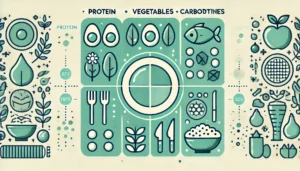
A simple visual template works for most meals:
- Half the plate: vegetables or salad, cooked with a little oil or steamed
- A quarter: a palm-sized portion of protein — fish, chicken, lean meat, eggs, tofu, tempeh, beans or lentils
- A quarter: a cupped-hand portion of fibre-rich carbohydrate — potatoes, rice, pasta, bread, oats or corn
- Thumb-sized: fats — oil, nuts, seeds, avocado, cheese
Then adjust by outcome, not by guilt. If weight is stable for three to four weeks and you want it to fall, shrink the carbohydrate and fat portions slightly before removing entire meals. If you are hungry all day, add vegetables and protein first. If you are just starting, read the mistakes beginners should avoid before changing anything else.
For a week of meals built this way, see the 7-day fat loss meal plan and portion control without counting calories.
Budget-friendly priorities
Nutritious food does not require specialty products. In most supermarkets the cheapest reliable fat-loss foods are eggs, tinned fish, chicken thighs, plain yogurt, milk, lentils, beans, oats, potatoes, frozen vegetables, cabbage, carrots, onions, bananas and seasonal fruit.
Frozen produce is often cheaper and lasts longer than fresh. Buying tinned beans and tomatoes in bulk, cooking once and portioning for later, and keeping a bag of frozen vegetables for emergency meals will do more for consistency than any supplement.
Frequently asked questions
Do I have to give up rice, bread and pasta?
No. These foods can be part of a fat-loss diet as long as portions fit your energy needs and the meal includes protein and vegetables. Choosing higher-fibre versions usually improves fullness and health outcomes.
Is fruit too sugary for fat loss?
Whole fruit is not the same as added sugar. It contains fibre and water, and the NHS includes fruit as part of its five-a-day guidance. The bigger contributors to excess calories are usually sugary drinks, juice in large volumes, and discretionary snacks.
Are potatoes really better than other carbohydrates?
In the satiety-index study, boiled potatoes scored highest per 240 kcal. That does not make them a "fat-burning food". Preparation matters: boiled or baked with the skin is very different from deep-fried chips with added fat.
Should I take a fibre supplement?
Food sources are preferable because they bring water, micronutrients and a variety of fibre types. Supplements are not a shortcut to fat loss, and this site does not recommend specific products. If you have a digestive condition, ask a clinician before increasing fibre sharply.
Keep reading
- Eating out while losing fat
- Liquid calories and fat loss
- Meal prep for fat loss
- Smart eating habits for fat loss
- Does eating more slowly help?
- Drinking water and fat loss
- Eating late at night: does it cause fat gain?
- How often should you eat for fat loss?
Sources
- NHS. Eating a balanced diet.
- NHS. The Eatwell Guide.
- WHO. Healthy diet fact sheet.
- Holt SH, Miller JC, Petocz P, Farmakalidis E. A satiety index of common foods. Eur J Clin Nutr. 1995;49(9):675–690.
- De Leon A, Roemmich JN, Casperson SL. Evenly distributing daily dietary protein across three meals reduces women's snack food reinforcement and intake of energy-dense snack foods during weight loss: a randomized controlled trial. J Acad Nutr Diet. 2026;126(9):156391.
- Zhang H, Vasileiou A, Searle D, et al. Dietary macronutrient composition and protein concentration for weight loss maintenance. Obesity (Silver Spring). 2025;33(10):1995–2004.
- Åberg S, Nordin E, Iversen KN, et al. Effects of hypocaloric wholegrain rye vs refined wheat diets on weight loss, cardiometabolic risk factors and gut microbiota: a 12-week randomized controlled trial. Clin Nutr. 2026;60:106618.
- Machalias A, Ferguson JJA, Guy T, Beck EJ. Cereal fibers and satiety: a systematic review. Nutr Rev. 2026;84(1):47–68.
- Nishi SK, Viguiliouk E, Blanco Mejia S, et al. Are fatty nuts a weighty concern? A systematic review and meta-analysis and dose-response meta-regression of prospective cohorts and randomized controlled trials. Obes Rev. 2021;22(11):e13330.
- Brown RC, Ware L, Gray AR, Tey SL, Chisholm A. Comparing the effects of consuming almonds or biscuits on body weight in habitual snackers: a 1-year randomized controlled trial. Am J Clin Nutr. 2023;118(1):228–240.
Limitations worth knowing: the satiety index is a small, older study using subjective ratings and fixed 240 kcal portions; real meals vary in size and composition. Several trials here are short (12–16 weeks) and use specific populations, so results may not transfer perfectly. The protein cohort is observational. The fibre-enriched bread trial found no effect, which is a useful reminder that "more fibre" is not automatically more filling. Nuts are calorie-dense — the evidence says they do not cause weight gain in the amounts studied, not that unlimited portions are free.
This article is general education, not medical advice. If you have a medical condition, are pregnant, take medication that affects weight or appetite, or have a history of disordered eating, speak to a qualified health professional before changing your diet or activity routine.