Eating Out While Losing Fat: Practical Tips
Many beginners believe fat loss means avoiding restaurants, family gatherings, or social events. In reality, sustainable fat loss must work with real life—including eating out.
On this page13 sections
The key is not perfection, but smart choices and consistency.
This article shows practical ways to eat out while continuing to lose fat—and it puts numbers on the part most advice skips: how much a restaurant habit actually adds, and which interventions have been tested in real restaurants rather than described in theory.
Updated 7 November 2026: expanded with the cohort data on how much out-of-home eating adds, the randomised portion-size trials, and the price premium on “healthier” delivery items.
Key Takeaways
- One meal rarely decides a week: a 500 kcal overshoot spread over seven days is about 71 kcal a day — but four such meals would wipe out a 300 kcal daily deficit
- Frequency matters more than any single dinner: UK adults who eat out at least weekly take in 75–104 kcal per day more than those who rarely do
- Portion interventions work on the targeted item, not the bill: a randomised worksite-cafeteria trial cut energy purchased from targeted categories by 8.9%, which was not statistically significant, with signs of compensation elsewhere
- Calorie labels work, but modestly: the 2025 Cochrane estimate was about 11 fewer kcal chosen per 600 kcal meal, and the fast-food effect faded within a year
- “Healthier” delivery items are not cheaper: items under 600 kcal cost 70.3 pence more per 100 kcal on two UK platforms
- Decide your order before you are hungry, choose protein first, put sauces on the side, and skip the sugary drink refill
Can You Lose Fat While Eating Out?
Yes. Fat loss is decided by the weekly total, not by a single evening. The arithmetic is simple enough to do in your head: if a restaurant meal puts you 500 kcal above your day, that is 500 kcal spread across seven days — about 71 kcal a day. If your deficit is 300 kcal a day (2,100 kcal a week), it takes about four such meals in the same week to erase it.
That framing explains why eating out twice a week usually changes nothing, while eating out five or six times a week quietly changes everything. The first case is a rounding error. The second case is your diet.
So the useful question is not “can I eat out?” but “what is my weekly pattern, and which meals are the expensive ones?” Understanding the fundamentals helps put this in perspective:
How Much Do Out-of-Home Meals Actually Add?
This has been measured, and the numbers are smaller than the internet usually claims — which is exactly why they are useful.
The UK National Diet and Nutrition Survey (four-day food diaries). Adults who ate meals out in a restaurant or café at least weekly consumed 75–104 kcal more per day than adults who ate these meals rarely. Takeaway meals eaten at home added 63–87 kcal per day. In children there was no association with meals out, but children who ate takeaway at home at least weekly consumed 55–168 kcal more per day, and the effect was larger in less affluent households (Goffe et al., International Journal of Behavioral Nutrition and Physical Activity, 2017).
The SUN cohort (9,182 Spanish university graduates, 4.4 years of follow-up). People eating out twice a week or more gained an adjusted average of +129 g per year, had a 36% higher odds of gaining 2 kg or more in a year, and among those starting below a BMI of 25, a 33% higher hazard of becoming overweight or obese (Bes-Rastrollo et al., Public Health Nutrition, 2010).
An honest reading of that 129 g. On its own it is tiny — roughly the energy in a couple of bites a day. The interesting part is not the average but the tail: the same behaviour carried a clearly higher risk of crossing the 2 kg-per-year line. Restaurant eating does not make everyone gain weight steadily; it makes some people gain fast, and that is the group who notice and then blame their metabolism.
The systematic review behind the claim. A review of 20 cross-sectional studies and 8 prospective cohorts found that all but one of the prospective studies, and about half of the cross-sectional analyses, reported a positive association between out-of-home eating and body weight. The authors were blunt about why the numbers disagree: studies define “eating out” differently and measure it differently, so comparisons are limited (Bezerra et al., Nutrition Reviews, 2012).
Practical translation: out-of-home food adds roughly 500–730 kcal a week to the diet of a regular restaurant eater. That is not catastrophic. It is also not nothing — it is about the size of the deficit many people are trying to hold.
What the Evidence Says About Restaurant Eating
Three strands of research are worth knowing before you decide your own rules: portion sizes, calorie information, and how long any of it lasts.
Portion size: smaller servings cut intake without cutting fullness
In an on-campus restaurant study (Nutrition Journal, 2018), researchers reduced the French fries portion by about 20% — from roughly 200 g in a porcelain bowl to about 159 g in a paper bag — for a week. Across 2,056 diners at baseline and 2,175 during the intervention, total fries intake fell 9.1% and plate waste fell 66.4%. In the interviewed subsample, reported satiety and how much people ate for the rest of the afternoon did not change.
An honest caveat: 86% of diners noticed the change, and only 32% said they would support making it permanent. The satiety data came from a small subsample of 19 fries eaters and 14 non-eaters, which is a real limitation. People also dislike being quietly served less. Apply the same logic to yourself — sharing a side, ordering the smaller portion, or skipping fries you did not actually want is a change you notice but do not miss.
The randomised version of this idea was less clean. In a stepped-wedge trial across nine English worksite cafeterias, sites were asked to cut portions by at least 10% in targeted categories. Six sites provided analysable data, and implementation varied widely: only 6–49% of products in the target categories were actually changed. Pooled energy purchased from targeted categories fell 8.9% — but the confidence interval (−16.7% to −0.4%) crossed zero with a p-value of 0.081, so it did not reach statistical significance. Every site showed a reduction; two were individually borderline. More importantly, secondary data suggested compensation: people bought more from the categories that were not changed, and there was no overall effect on total energy purchased (Hollands et al., International Journal of Behavioral Nutrition and Physical Activity, 2018).
What that means for you at a restaurant table: shrink the item you care least about, and do not let the saving migrate into an extra course.
Calorie labels: real, but small on average
The 2025 Cochrane review of calorie labelling pooled 25 studies (16 randomised, mostly real restaurants and cafeterias) and found a small reduction in energy selected: a standardised mean difference of −0.06, based on high-certainty evidence. Translated into ordinary numbers, for an average 600 kcal meal that is about 11 kcal less chosen, roughly a 1.8% reduction. For actual consumption the estimate was larger — about 35 kcal less, around 5.9% — but from fewer studies and lower-certainty evidence (Clarke et al., Cochrane Database of Systematic Reviews, 2025).
A large quasi-experimental study in a fast-food franchise (BMJ, 2019) tracked 104 restaurants and 49 million transactions. Calories purchased per transaction fell about 60 kcal (roughly 4%) right after calorie labels appeared, then began rising again by about 0.71 kcal per transaction per week over the following year. The reduction was strongest for side items, and it faded faster in lower-income areas.
There is also a side effect worth knowing. In a natural experiment across McDonald's and five control chains in four New England cities (2,883 adults, 2,131 adolescents, 433 children), adult meals after labelling contained 4.0% fewer calories from sugar but 1.8% more calories from saturated fat. In children, purchased fibre fell by 1.4 g. Adolescent meals did not change (Petimar et al., Journal of the Academy of Nutrition and Dietetics, 2020). Labels steer attention; they do not guarantee a better meal, and “low calorie” is not the same as “well built”.
An online takeaway experiment with 1,040 consumers in England (Appetite, 2025) found no statistically significant reduction in total calories ordered when item-level or item-plus-total calorie information was shown — with one exception: respondents over 55 chose the low-calorie main more often when item and total calories were both displayed.
Read together, these results say something useful: menu information nudges averages a little, and the effect decays as the novelty wears off. It will not save you. Your own standing order will.
The “Healthier” Option Is Often Priced Higher
One structural obstacle gets almost no attention: price. An analysis of 7,392 adult menu items from large chains on two major UK delivery platforms (menu data collected June 2023) found that price rose with calorie content initially — about 101 pence per extra 100 kcal — but the increase slowed as items got larger. The consequence is a relative discount on the biggest items.
Items classified as “healthier” (under 600 kcal, the benchmark used in English menu recommendations) cost 70.3 pence more per 100 kcal than items of 600 kcal or more, after controlling for menu category (Asai et al., Health Promotion International, 2026).
This is a cross-sectional snapshot of menus, not a trial, and it says nothing about why restaurants price that way. But it explains a very common experience: the order that fits your plan costs more than the one that does not, and the gap is largest exactly when you are budgeting. Two cheap countermeasures: order the smaller portion of the dish you actually want rather than the “healthy” dish you do not, and treat delivery apps as a once-in-a-while convenience rather than the default Tuesday.
Choose Protein First
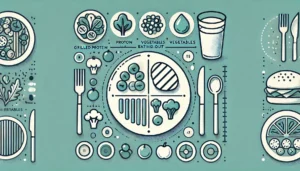
When eating out, start by choosing a protein-rich main dish.
- Grilled chicken or fish
- Egg-based dishes
- Lean meat options
- Tofu or tempeh
Protein helps control appetite and reduces overeating later. In practice, that means picking the dish before you are seated and hungry, and remembering that sauce and cooking method usually matter more than the protein itself: grilled, roasted, steamed or braised dishes tend to arrive with far less added fat than fried or cream-based versions of the same ingredient.
A useful test for any menu: can you describe the dish in three words — protein, vegetable, starch? If the description needs a sauce, a crust and a side of fries to make sense, the protein is not the main event. If you want a specific target for daily intake rather than a guess, the numbers are in protein intake for body recomposition.
Watch Portion Sizes
Restaurant portions are often larger than necessary, and the cheapest calories on the table are usually the ones you did not order.
- Share meals when possible
- Stop eating when comfortably full
- Leave some food on the plate — or take it home deliberately
- Order the regular size, not the “upgrade”
Simple portion awareness goes a long way:
The portion research above is the most practical argument for this section: a slightly smaller serving did not make people feel less full, and in the fries study it did not produce compensation later in the day. The worksite trial adds the missing half of the lesson — compensation does happen if the rest of the tray is still available. So intervene on the biggest, most calorie-dense component (the fried side, the bread basket, the creamy starter) and leave the rest of the meal alone.
Be Smart With Carbs and Fats
You don’t need to avoid carbs or fats completely—just be deliberate about how many versions of each arrive at the table.
- Choose one main carb source
- Ask for heavy sauces on the side
- Limit fried foods — one fried item is usually enough
- Prefer dressings you can see (oil and vinegar) over ones you cannot
Understanding food choices helps here:
Two practical moves: ask for sauces and dressings on the side so you decide how much to use, and avoid paying for the “upgrade” bundle (larger fries, extra sides) that exists to increase the average order rather than to satisfy your appetite. If a dish arrives with bread, rice and potatoes, that is three carb sources — pick two, and you have solved most of the problem without counting anything.
Don’t Drink Your Calories
Liquid calories add up quickly and don’t provide much fullness.
- Choose water, sparkling water or unsweetened tea
- Skip the refillable sugary drinks
- Decide about alcohol before you sit down, not after the first glass
Hydration habits matter:
Drinks are the easiest place to trim without touching the food you came for: an unsweetened drink costs you nothing in satiety, while refillable sugary drinks are one of the few items that reliably increase total intake without making you feel any fuller. Alcohol deserves its own line because of the second-order effect — it lowers the guard on the second half of the meal, which is where the dessert and the extra side get ordered. More on the calorie side of drinks: liquid calories and fat loss.
Plan the Rest of Your Day
If you know you’ll eat out later, keep earlier meals lighter and protein-focused. Planning reduces stress and guilt, and it removes the decision from the moment when you are least able to make it well.
A simple structure can help:
“Lighter” does not mean skipped. A protein-based breakfast, a normal lunch with vegetables, and a walk before dinner all reduce the odds that you order from hunger instead of from the menu. Arriving at the restaurant having eaten nothing since breakfast is not discipline; it is a setup, and the bill is usually a starter, a main and a dessert.
The other half of planning is the day after. One heavier meal does not require a compensating fast, and skipping breakfast to “balance” it usually produces a hungrier afternoon. Return to your normal pattern at the next meal — the same principle covered in what to do at a plateau, where panic-restriction is the usual mistake.
A 60-Second Ordering Checklist
- Look at the menu before you are hungry and pick the main dish then
- Protein first; grilled, roasted or steamed rather than fried
- One carb source, not three (bread plus potatoes plus rice is a choice you can skip)
- Sauces, dressings and butter on the side
- Eat vegetables or salad somewhere in the meal
- Water, sparkling water or unsweetened tea first; decide about alcohol before you sit down
- Stop when comfortably full, and take the rest home rather than finishing it to be polite
- Next meal back to normal — no compensating with a skipped breakfast the next day
Common Eating-Out Mistakes
- Skipping meals before eating out
- Feeling guilty after one meal
- Turning one meal into a full cheat day
- Giving up consistency for the rest of the week
- Ordering the “healthy” dish you do not want, then eating again an hour later
- Letting alcohol make the decisions for the second half of the meal
One meal does not define your progress. The pattern does. If a restaurant meal lands in a week where five other days were ordinary, nothing needs fixing — and if it lands in a week where every day was a restaurant day, the fix is the frequency, not the guilt.
Frequently Asked Questions
How often can I eat out and still lose fat?
There is no single number, but there is a useful frame. In the UK survey data, eating out at least weekly was associated with roughly 75–104 extra kcal a day — meaningful over months, easy to absorb if the rest of your week is stable. One to three restaurant meals a week fits comfortably for most people. If eating out is most days, the ordering rules in this article stop being a detail and become the plan.
Should I skip breakfast if I know I’m eating a big dinner?
Skipping is not required, and for many people it backfires by making the restaurant decision an easy one to get wrong. A smaller, protein-focused breakfast and lunch is usually a better trade than no breakfast at all.
Do calorie labels on menus help me?
On average they reduce the calories people choose by a small amount — around 11 kcal in a 600 kcal meal in the Cochrane estimate — and the effect tends to fade with time. They also shift which nutrient changes, not just how much: in one natural experiment sugar went down while saturated fat went up. Use labels as one input, not as the decision itself.
What about buffets and set menus?
Buffets remove the portion control that restaurants normally do for you, so you have to supply it: one plate, protein and vegetables first, and decide about dessert before you go back for seconds rather than while standing at the dessert table. For set menus, pick the option with a clear protein and a vegetable, and treat the fried starter as the item to share.
How late is too late to eat?
Later meals are not automatically stored as fat — the total day still decides. But late, large meals can disturb sleep, and poorer sleep makes the next day’s appetite harder to manage; that chain is covered in eating late at night and fat loss.
What if I have a health condition affected by diet?
General eating-out tips are not a substitute for individual advice. If you have diabetes, high blood pressure, kidney disease or a history of an eating disorder, ask a clinician or dietitian what fits your situation.
Keep Reading
Sources
- NHS. Eight tips for healthy eating (base diet, portion expectations and the role of drinks).
- NHS. Managing your weight (gradual weight loss and sustainable habits).
- WHO. Healthy diet — fact sheet (energy balance, fat and free-sugar limits).
- Vermote M, Versele V, Stok M, et al. The effect of a portion size intervention on French fries consumption, plate waste, satiety and compensatory caloric intake: an on-campus restaurant experiment. Nutrition Journal, 2018.
- Hollands GJ, Cartwright E, Pilling M, et al. Impact of reducing portion sizes in worksite cafeterias: a stepped wedge randomised controlled pilot trial. International Journal of Behavioral Nutrition and Physical Activity, 2018.
- Clarke N, Pechey E, Shemilt I, et al. Calorie (energy) labelling for changing selection and consumption of food or alcohol. Cochrane Database of Systematic Reviews, 2025.
- Petimar J, Zhang F, Cleveland LP, et al. Estimating the effect of calorie menu labeling on calories purchased in a large restaurant franchise in the southern United States: quasi-experimental study. BMJ, 2019.
- Petimar J, Moran AJ, Ramirez M, Block JP. A natural experiment to evaluate the nutritional content of restaurant meal purchases after calorie labeling. Journal of the Academy of Nutrition and Dietetics, 2020.
- Tanasache OA, Law C, Smith RD, et al. Impact of calorie labelling on online takeaway food choices: an online Menu-Based Choice Experiment in England. Appetite, 2025.
- Goffe L, Rushton S, White M, et al. Relationship between mean daily energy intake and frequency of consumption of out-of-home meals in the UK National Diet and Nutrition Survey. International Journal of Behavioral Nutrition and Physical Activity, 2017.
- Bes-Rastrollo M, Basterra-Gortari FJ, Sánchez-Villegas A, et al. A prospective study of eating away-from-home meals and weight gain in a Mediterranean population: the SUN cohort. Public Health Nutrition, 2010.
- Bezerra IN, Curioni C, Sichieri R. Association between eating out of home and body weight. Nutrition Reviews, 2012.
- Asai Y, Cornelsen L, Kalbus A. Is there a healthy-food premium? A cross-sectional analysis of the UK online food delivery sector. Health Promotion International, 2026.
This article is general information for healthy adults, not medical advice. If you have diabetes, heart disease, kidney or liver disease, or a history of an eating disorder, get individual advice from a qualified clinician before starting a weight-loss or fat-loss program. Persistent low mood, binge-eating episodes, or a loss of control around food are treatable — speak to a doctor rather than pushing through alone.