Training for Fat Loss: What Beginners Really Need to Know
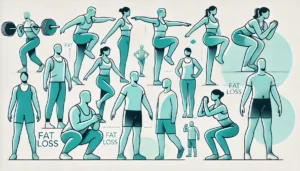
Many beginners believe fat loss training must be intense, exhausting, and time-consuming. In reality, effective training for fat loss is far simpler—and far more sustainable.
On this page17 sections
This article explains how training really supports fat loss, what beginners should focus on, and how to avoid common exercise mistakes.
How Training Supports Fat Loss
Training helps fat loss by increasing calorie expenditure, preserving muscle, and improving metabolic health.
- Burns additional calories
- Helps maintain muscle mass
- Improves insulin sensitivity
- Supports long-term weight maintenance
However, training alone is not enough without proper nutrition.
Do You Need Intense Workouts to Lose Fat?
No. Intensity is not a requirement for fat loss—consistency is.
- Short workouts can be effective
- Low-impact movement still counts
- Overtraining often leads to burnout
Beginners benefit most from simple, repeatable routines.
A short workout example:
Strength Training vs Cardio for Fat Loss
Both strength training and cardio can support fat loss—but they play different roles.
- Strength training: preserves muscle, improves body composition
- Cardio: increases calorie burn and cardiovascular health
A combination of both works best for most people.
How Often Should Beginners Train?
More is not always better.
- 2–4 training sessions per week
- Focus on full-body movements
- Allow time for recovery
Recovery supports fat loss just as much as training.
Daily Movement Matters More Than You Think
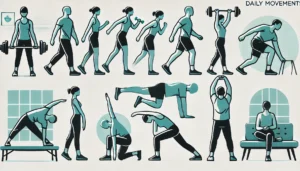
Fat loss is not only about workouts. Daily movement plays a huge role.
- Walking more
- Taking stairs
- Staying active throughout the day
These small actions add up over time.
Common Training Mistakes Beginners Make
- Doing too much too soon
- Ignoring recovery
- Relying only on cardio
- Using exercise to “punish” eating
Training should support fat loss—not make it stressful.
How Training Fits a Sustainable Fat Loss Plan
Training works best when combined with good nutrition, hydration, and recovery.
Fat loss is a system—not a single habit.
Related habits that support training:
Key Takeaways
- Training supports fat loss, but nutrition leads
- You don’t need extreme workouts
- Consistency beats intensity
- Daily movement matters
- Sustainable routines win long term
When training feels manageable, fat loss becomes far easier to maintain.
What Training Can and Cannot Do for Fat Loss
Exercise burns calories, but the body is good at defending its energy stores, and a large part of that defence is behavioural. A 2026 study in Communications Medicine followed 16 sedentary adults with overweight through 12 weeks of supervised walking at a prescribed energy cost of 20 kcal per kilogram per week. Total daily energy expenditure rose, but resting and sleeping metabolic rate fell, walking economy improved, and liver and kidney volumes dropped by roughly 5%. Body weight hardly changed, while body composition improved.
The study is small and uncontrolled, and its authors are careful about that. Its value is explanatory: it shows why “I exercised, therefore I should have lost three kilograms” is the wrong mental model. Exercise changes what your body is made of and how well it works. It is a weak lever for the size of the deficit, and a strong lever for the quality of the result.
That is why the calorie deficit still comes from food, and training protects what you want to keep. Calorie deficit for beginners covers the intake side properly.
Resistance, Aerobic or Both?
The best available comparison is a 2025 systematic review and meta-analysis in the Journal of the International Society of Sports Nutrition: 36 randomised studies, 1,564 participants, comparing resistance training, aerobic training and concurrent training in healthy adults.
For interventions lasting at least ten weeks, aerobic training beat resistance training for total body mass (−1.82 kg) and fat mass (−1.06 kg), but retained less fat-free mass (−0.88 kg). Concurrent training reduced more fat mass than resistance training alone (−1.09 kg). There was no significant difference between modalities in body fat percentage. When workloads were matched between groups, the differences largely disappeared.
Two conclusions follow. First, aerobic work has a modest edge for absolute fat loss in longer programmes, because the energy cost is easier to accumulate. Second, resistance training is not a fat-loss strategy on its own — it is a lean-mass strategy, and it does not impede fat loss when combined with cardio.
For beginners, this makes the practical answer “both, with the emphasis on what you will actually do consistently”. A detailed split is in training split for body recomposition.
Why Lifting Matters More Than It Appears To
Calorie restriction removes both fat and lean tissue. A 2026 systematic review with network meta-analysis in Diabetes, Obesity and Metabolism pooled 34 randomised trials and 1,455 participants to compare calorie restriction alone with restriction plus exercise.
Adding exercise preserved fat-free mass by about 0.87 kg on average, preventing roughly 46% of the loss that occurred with restriction alone. In the network analysis, mixed training had the largest effect (+1.20 kg), followed by strength training (+0.83 kg); endurance training fell just short of significance (+0.51 kg). Subgroup tests found no significant difference between modes, so the ordering is suggestive rather than definitive.
The same pattern appears in more aggressive diets. A 2025 meta-analysis of very-low-energy diets found that adding exercise preserved 0.83 kg more fat-free mass than the diet alone, across seven studies and 292 participants — with the authors noting the small number of studies and their risk of bias as limitations.
The practical translation: if you are dieting, lift two or three times a week and eat enough protein. Not because it doubles fat loss, but because it changes the composition of what you lose, which matters for how you look, how you function and how easily you hold the result. Strength training for fat loss has the beginner progression.
A Beginner Programme That Fits Real Life
Two or three full-body sessions per week is enough to start, and more than most beginners need. A simple template:
- Session A: squat pattern, horizontal push, horizontal pull, hinge, carry or core.
- Session B: hinge pattern, vertical push, vertical pull, lunge or step-up, core.
- Dose: two to three sets of six to twelve repetitions, stopping two to three repetitions short of failure.
- Progression: add a small amount of weight or one repetition when you complete all sets with clean form.
- Rest: 60 to 120 seconds between sets is a reasonable default; longer for heavy compound lifts.
Machines, dumbbells, resistance bands and body weight all count. The best equipment is what you have access to on a Tuesday when you are tired. If you are training at home, the beginner home workout and home workout for fat loss are built for that.
Cardio: How Much, and What Kind
The World Health Organization recommends 150 to 300 minutes of moderate-intensity aerobic activity per week for adults, plus muscle-strengthening activity on at least two days. That is a health baseline, not a fat-loss prescription, and it is a sensible place to start.
For fat loss, the modality matters less than the total dose, and low-impact steady work is easier to recover from than repeated high-intensity sessions. Walking is the most underrated option: it adds energy expenditure without much fatigue or hunger, and it can be accumulated in small blocks. Walking for fat loss covers how to build the habit, and cardio for fat loss compares the options honestly.
Daily steps have their own evidence base. A 2026 meta-analysis of lifestyle programmes found that participants who increased daily steps during the weight-loss phase, to an average of roughly 8,500 per day, maintained significantly more weight loss at follow-up than controls. The authors call the finding preliminary, but it is consistent with the broader literature on non-exercise activity.
Diet plus Exercise Beats Either Alone
A 2026 overview of 32 systematic reviews concluded that combined physical activity and diet interventions generally outperformed diet-only or exercise-only approaches for weight, BMI, waist circumference, fat mass and fitness. The most durable effects came from programmes lasting six to twelve months with frequent structured contact, supervision and resistance training included.
The overview also carries an important caveat: only 31% of the included reviews were rated high quality. The direction of the evidence is consistent, but the precision is not what a headline would suggest.
On ectopic fat specifically, a 2025 meta-analysis of 17 studies and 732 participants found that combined diet and exercise reduced body weight more than exercise alone (−2.85 kg), and diet alone also beat exercise alone (−2.57 kg), while differences in liver fat and intramuscular fat were not significant. Weight loss itself was the strongest moderator of visceral fat change.
None of this is surprising: food controls the deficit, training controls what the deficit costs you. Nutrition for fat loss and fat loss versus weight loss explain the two halves.
Protein, Recovery and the Parts Beginners Skip
The 2026 ISSN position stand recommends 1.2–1.6 g of protein per kilogram of body weight per day for general fat loss in the general population, and 1.6–2.2 g/kg when combined with resistance training to support lean mass. It also notes that total daily protein matters more than the exact timing, though spreading it across at least three meals is a reasonable habit for people who train.
Recovery is not optional. Sleep restriction has been shown to reduce fat loss in behavioural weight-loss interventions: a 2026 systematic review of 30 studies found that manipulating sleep downward impaired fat loss, while associations with sleep duration in observational studies were inconsistent. If you are training hard on six hours of sleep, you are borrowing against the result. Sleep for fat loss and rest and recovery cover the practical side.
Mistakes That Cost Beginners Months
- Cardio only. It works, but you lose more lean mass and end up lighter rather than leaner.
- Too much, too soon. Six sessions in week one is a plan to quit by week three.
- No progression. The same weights for six months is maintenance, not training.
- Using exercise to punish eating. It turns training into a debt system and is a known route to disordered patterns.
- Changing the programme every fortnight. Beginners need repetition more than variety.
- Ignoring daily movement. Three workouts cannot outrun a day spent sitting.
If you are rebuilding after a break, building a fat loss routine and habit stacking are more useful than a new programme. If you are also trying to add muscle, body recomposition explained sets realistic expectations, and cardio during body recomposition covers how much is enough.
Frequently Asked Questions
Do I need to do cardio to lose fat?
No. A calorie deficit does the work. Cardio helps create and maintain that deficit and improves cardiovascular fitness, but it is not mandatory if your diet and daily movement are consistent.
Will lifting make me bulky?
Not in a calorie deficit, and not by accident. Resistance training in a deficit mainly protects the muscle you already have; meaningful muscle gain requires a surplus, adequate protein and years of consistent training.
How many days a week should a beginner train?
Two to three full-body sessions, plus walking. That is enough to make progress and leaves room to recover, which is where the adaptation actually happens.
Should I train fasted to burn more fat?
Fasted training can burn a higher proportion of fat during the session, but total daily energy balance is what determines fat loss. Choose whichever approach you can do consistently.
How long before training shows on the scale?
Body composition changes often appear in measurements and photos before the scale moves, and the scale may stall for weeks while fat mass falls and lean mass rises. Judge with a tape measure and monthly photos, not daily weigh-ins alone.
Sources
- Lafontant K, et al. Comparison of concurrent, resistance, or aerobic training on body fat loss: a systematic review and meta-analysis. J Int Soc Sports Nutr. 2025. PMID 40405489
- Deller M, et al. Effects of calorie restriction with and without strength, endurance or mixed training on fat-free and skeletal muscle mass in overweight or obese individuals. Diabetes Obes Metab. 2026. PMID 42144246
- Lowrie FJ, et al. The impact of exercise on fat free mass reduction during very low energy diet-induced weight loss. Obes Res Clin Pract. 2025. PMID 41093698
- Kazeminasab F, et al. Combined exercise training and dietary interventions versus independent effect of exercise on ectopic fat. J Int Soc Sports Nutr. 2025. PMID 40619882
- Salem A, et al. Combined diet and physical activity effects on health-related outcomes in people with overweight or obesity: an overview of systematic reviews. Front Nutr. 2026. PMID 42211095
- Knaan T, et al. Multilevel metabolic adaptation to exercise training. Commun Med. 2026. PMID 41814067
- Saadeddine D, et al. Daily steps during nutritional lifestyle modification programs for obesity management. Int J Environ Res Public Health. 2026. PMID 42074460
- Reytor-González C, et al. Higher-protein nutrition and concurrent exercise in obesity: a narrative review. Nutrients. 2026. PMID 42514348
- Aragon AA, et al. International Society of Sports Nutrition position stand: diets for body weight reduction. J Int Soc Sports Nutr. 2026. PMID 42867412
- Duan L, et al. Sleep and its impact on the success of weight loss interventions in adults with excess weight. Obes Rev. 2026. PMID 42478101
- NHS. Exercise guidelines and strength and flexibility exercises.
- World Health Organization. Physical activity — fact sheet.
This article is general information, not medical advice. If you have a heart condition, joint problems, uncontrolled blood pressure or any condition that limits exercise, seek advice from a qualified health professional before starting a new programme.