10-Minute Fat Burn Workout You Can Do at Home
You don’t need a gym, equipment, or a lot of time to be active. This 10-minute bodyweight circuit is built for schedules you can actually keep. It raises your heart rate, works your muscles and burns calories — but fat loss still comes mostly from what you eat: NHS guidance notes that most weight loss comes from reducing the calories you eat and drink, while regular physical activity is what helps you keep the weight off.
On this page16 sections
All exercises can be done at home, in your office, or even outdoors. Just 10 minutes — no excuses.
Updated 24 November 2026: this article now includes the evidence on cool-downs and soreness, beginner modifications at an intensity the trials actually used, and fasted versus fed training, alongside the measured size of the afterburn effect from 22 studies.
Key takeaways (if you read nothing else)
- Ten hard minutes is genuine exercise, but it sits inside a weekly target: at least 150 minutes of moderate activity or 75 vigorous minutes, plus strength work on two or more days.
- Splitting the same work into short bouts is as effective as one long session: 19 studies with 1,080 adults found the same fitness and blood-pressure results.
- The afterburn is small and now measured: about 136 kJ of extra post-exercise energy after intervals against 101 kJ after steady work of the same duration.
- Fat loss still comes mainly from food. What the circuit delivers reliably is conditioning, consistency and a daily habit you can keep.
Why a 10-Minute Workout Works
Vigorous activity uses more calories per minute than moderate activity, so a short, hard session can be a genuine use of limited time — but total calories still decide fat loss, and the adult guidelines are built on a weekly target: at least 150 minutes of moderate-intensity aerobic activity (or 75 minutes of vigorous-intensity activity), plus muscle-strengthening work on two or more days. This routine combines:
- Cardio to increase heart rate
- Strength movements to build muscle
- Intervals to maximize calorie burn
After hard exercise your body keeps using slightly more oxygen for a while — the “afterburn effect”, or EPOC. It is real, and it has been measured. In a systematic review of 22 studies that subtracted baseline energy expenditure, intervals produced about 136 kJ of extra post-exercise energy and steady work about 101 kJ within a three-hour measurement window; with windows longer than three hours the figures rose to 289 kJ and 159 kJ respectively (Panissa et al., Obesity Reviews, 2021). Read the gap rather than the headline: intervals beat steady work by roughly 35 kJ, which is about 8 kcal, and the largest number in the whole review — 289 kJ, some 69 kcal after a long interval session — is roughly one biscuit. It is smallest after short or easy workouts, which is exactly the format this article recommends. Treat it as a small bonus, not the reason a short workout works.
Warm-Up First (About 5 Minutes)
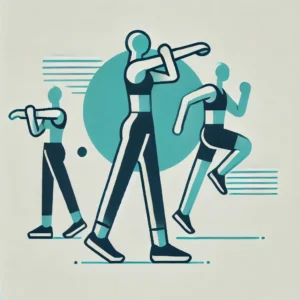
The NHS warm-up routine takes at least 6 minutes. If your time is tight, do a shortened version rather than skipping it — a warm-up makes the session feel better and reduces the chance of tweaking something:
- March on the spot (then forwards and backwards), about 3 minutes
- Heel digs: alternate heels to the front, about 60 in a minute
- Knee lifts: bring alternate knees up to touch the opposite hand, about 30 in 30 seconds
- Shoulder rolls while still marching: 5 forwards, 5 backwards
10-Minute Fat-Burning Circuit
Perform each exercise for 40 seconds, followed by 20 seconds rest. Complete all 10 exercises.
1. Jumping Jacks
Great for raising heart rate and warming the full body. Move at a steady, comfortable pace.
2. Squats
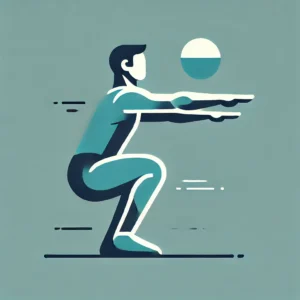
Keep your feet shoulder-width apart. Push your hips back, keep your chest up, and stand with control.
3. High Knees
Lift your knees quickly toward your chest. Pump your arms to increase intensity.
4. Push-Ups
Use full push-ups or knee push-ups depending on your fitness level. Keep your core tight.
5. Mountain Climbers
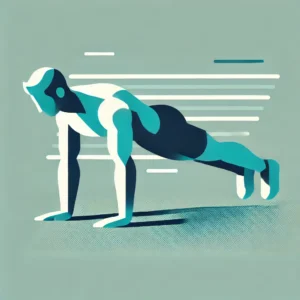
A powerful fat-burning move. Bring your knees toward your chest quickly while maintaining a strong plank.
6. Reverse Lunges
Step back into a lunge position and alternate legs. Keep your balance and engage your legs.
7. Plank Hold
Maintain a straight line from shoulder to heel. Keep your core engaged and avoid sagging hips.
8. Fast Feet (Quick Steps)
Move your feet rapidly, staying light on your toes. This raises heart rate without impact.
9. Glute Bridge
Lie on your back, knees bent. Lift your hips toward the ceiling, squeeze your glutes, then lower slowly.
10. Burpees
A full-body movement that maximizes calorie burn. Move at a controlled pace. Step back instead of jumping if needed.
Start Safe
These are general exercises for adults in good health. Stop straight away if you feel pain, chest discomfort, dizziness or unusual breathlessness. Speak to a health professional before starting if you are unsure whether these exercises suit your current fitness, or if you have a health problem, an injury or symptoms, have had a recent health event such as a heart attack or an operation, or are pregnant or have recently given birth.
Cool Down: What It Does and Does Not Do

The cool-down is not where fat gets burned. Its job is narrower and more practical: bring your heart rate down gradually so you do not feel light-headed, and finish with two stretches you will actually keep doing at the end of every session.
The claim that stretching after training prevents soreness does not hold up well. A systematic review and meta-analysis of 11 randomised trials (229 participants aged 17–38, mostly men) compared post-exercise stretching with passive rest and found no effect on strength recovery (effect size −0.08, 95% confidence interval −0.54 to 0.39) and no effect on soreness at 24, 48 or 72 hours (effect sizes −0.09 to −0.24). About 70% of the included trials were at high risk of bias and the certainty of the evidence was rated very low, so the honest summary is that a cool-down is comfortable and harmless, not a recovery treatment.
- 60 seconds: walk or march on the spot until your breathing is conversational again.
- 20–30 seconds per side: hamstring and quad stretch, no bouncing, no pushing into pain.
- Four slow breaths: in through the nose, out through the mouth, before you stop completely.
That is the whole protocol. Do not buy equipment for it, and do not skip the session because you are short of time — a shortened cool-down beats no cool-down, and a warm-up matters more (see the warm-up section above).
Beginner Modifications That Keep It Safe
Every movement in the circuit above has a lower-impact version. Use it without treating it as a lesser workout: the training effect comes from the effort relative to your current fitness, not from the amount of noise your feet make.
- Step back instead of jumping for burpees, and step forward instead of jumping for lunges.
- Push-ups on your knees, or hands on a kitchen counter — the chest-to-floor distance is what matters.
- March instead of high knees, and keep the pace steady rather than fast.
- Squat to a chair and stand back up if balance is the limiting factor.
- Hold the plank for 20–30 seconds instead of 40, and stop when your hips start to sag.
How hard should it feel? Use the talk test: you should be able to say a short sentence, but not hold a conversation or sing. That sits around 12–14 on a 20-point perceived-exertion scale.
Moderate intensity is not a compromise. A 2026 systematic review and meta-analysis of 19 randomised trials (644 adults with overweight or obesity) found that training near the intensity where fat oxidation is highest — for most people a brisk, conversational pace — reduced fat mass by 2.86 kg, waist circumference by 4.21 cm and body weight by 3.66 kg compared with control groups. Methodological quality was mostly very low to moderate, so treat the size of those numbers as approximate, but the direction is consistent: you do not need to be destroyed by ten minutes to get a training effect.
Progress with time before you progress with speed. One round that you finish with control is a better session than two rounds you abandon.
Tips That Actually Maximise Fat Burn
Most of the advice attached to short workouts does not survive contact with the evidence. Four things do.
- Train whenever you will actually train. Exercising fasted does not increase fat loss. In a four-week randomised trial, 20 young women on the same calorie deficit did one hour of steady-state aerobic exercise three times a week, either after an overnight fast or after a meal, with the same total work. Both groups lost significant weight and fat mass, and there was no difference between them in any outcome. Fasted training is a scheduling choice, not a strategy.
- Let intensity do the work per minute, not per session. Harder minutes burn more calories while you are moving, and the extra post-exercise burn is real but small — roughly 136 kJ versus 101 kJ in the first three hours after high-intensity versus moderate continuous exercise in the Panissa review listed under Sources. That is not a reason to eat more afterwards.
- Add the minutes up across the week. The adult target is 150–300 minutes of moderate activity or 75–150 minutes of vigorous activity per week, plus muscle-strengthening work on two or more days. Three or four ten-minute sessions is 30–40 minutes — useful, but a fraction of that target unless you also walk and lift.
- Protect sleep and your food plan. Fat loss still comes mostly from the calorie deficit. Sleep deprivation makes the deficit harder to hold, and no workout format outruns a week of unplanned eating.
What does not help: training in a sweat suit, "fat-burning" creams, and sessions long enough that you skip the next two. Consistency over months is the variable that separates people who lose fat from people who only start.
Why This Workout Works for Busy People
Time is the biggest obstacle for most people, and a 10-minute session removes that excuse: no equipment, no commute, and it counts toward the weekly target of at least 150 minutes of moderate or 75 minutes of vigorous activity. Repeated a few times a week and paired with a sensible eating plan, those short sessions add up.
How often should you do this workout?
The 10-minute circuit is a tool, not a complete program. Used well:
- Beginners: 2–3 times per week, with at least one rest day between sessions.
- Intermediate: 3–4 times per week, or 2 sessions plus 2 longer walks.
- As a backup: on days when your normal workout is not possible. Ten minutes of movement beats a skipped session, every time.
What you should not do is treat ten minutes a day as a complete fat-loss plan. The World Health Organization recommends 150–300 minutes of moderate-intensity aerobic activity per week for adults, plus muscle-strengthening work on two or more days — so this workout is best used as one piece of that weekly total, alongside walking and resistance training.
Does 10 minutes really burn fat?
Honest answer: it contributes, but it does not replace the fundamentals.
- Calories: a hard 10-minute bodyweight circuit burns a modest number of calories — useful, but smaller than most people assume. A single session will not create a meaningful deficit on its own.
- The "afterburn" (EPOC): post-exercise oxygen consumption is real but small and short-lived. A review by Børsheim and Bahr in Sports Medicine describes EPOC as influenced by exercise intensity and duration — it is not a licence to eat extra.
- What it does deliver reliably: cardiovascular conditioning, consistency, and a manageable daily activity habit. Those three are what make a calorie deficit survivable long enough to work.
- Fat loss still comes mainly from food. NHS guidance notes that most weight loss comes from reducing the calories you eat and drink, while regular physical activity is what helps you keep the weight off.
So: use this workout to raise your weekly activity and to protect the habit. Judge it by whether you still do it in week eight, not by what the scale does tomorrow morning.
How to progress over four weeks
- Week 1: one round of the circuit, at a pace where you can finish the movements with control.
- Week 2: one round, slightly faster — shorter rest between exercises.
- Week 3: one full round plus half a second round, or add 10 seconds to each interval.
- Week 4: two full rounds, or one round with harder variations (jump squats, push-ups on the floor, faster mountain climbers).
Progress by adding time or difficulty, not by adding days first. The body adapts to the demand you give it, and two hard rounds three times a week beats five exhausted half-sessions.
Frequently asked questions
Can a 10-minute workout help me lose belly fat?
It can help create the activity side of a calorie deficit, but no workout removes fat from a specific area. "Spot reduction" is not how the body works — where you lose fat first is largely genetic. Overall fat loss is driven by a consistent calorie deficit, supported by activity and resistance training.
Is 10 minutes a day enough exercise?
Ten minutes a day is a good start and much better than nothing, but it is below the 150–300 minutes of moderate activity per week recommended for adults. Add daily walking and two strength sessions per week to reach a genuinely effective weekly total.
Should I do this workout before or after weights?
After. If you lift on the same day, keep the weights first so your strength work is not compromised by fatigue, then use the 10-minute circuit as a finisher or on a separate day.
How many calories does this circuit burn?
It depends on your body weight, effort level and how much of the 10 minutes is actually work. Rather than chasing a number, focus on intensity you can repeat three times a week — repeated sessions beat one heroic session.
What the Research Actually Shows About Short Sessions
A 10-minute session appears in the research literature under three different names: accumulated exercise (several short bouts instead of one long one), interval training (short hard efforts separated by recovery), and "exercise snacks" (one- to two-minute bursts of movement spread through the day). They are not the same thing, and they do not carry the same evidence for fat loss. Here is what the trials and meta-analyses actually measured.
Short bouts versus one long session: the same benefit
A meta-analysis in Sports Medicine (2019) pooled 19 studies with 1,080 adults that compared a single continuous session against the same total duration, mode and intensity broken into shorter bouts through the day. Cardiorespiratory fitness and blood pressure came out the same in both conditions. Body mass change was slightly more favourable when exercise was accumulated (−0.92 kg, 95% CI −1.59 to −0.25 across five studies with 211 participants), and when weekly volume passed 150 minutes, body fat percentage differed by −0.87 percentage points (three studies, 166 participants). Those fat-loss numbers rest on a handful of small trials, so treat them as encouraging rather than settled. The robust finding is the main one: splitting the same work into short pieces did not make it less effective. Sessions can be accumulated the same way that walking can.
Epidemiology points the same way. In 4,840 US adults aged 40 and over who wore an accelerometer, 700 deaths occurred over about 6.6 years of follow-up, and the mortality benefit of moderate-to-vigorous activity was much the same whether the minutes arrived in bouts of at least five minutes or in short, sporadic bursts (Saint-Maurice et al., Journal of the American Heart Association, 2018). Adding more bouted activity on top of the same total did not lower risk further, which is the same message as the trial literature: count the total, not the shape of the sessions.
Interval training versus steady cardio
An umbrella review with meta-analysis in Sports Medicine (2024) combined 16 systematic reviews covering 79 randomised trials and 2,474 participants. Interval training reduced body fat percentage by 0.77 points more than moderate-intensity continuous training (95% CI −1.12 to −0.32) and by 1.50 points more than a no-exercise control. The subgroup that matters most for a short session: low-volume protocols, meaning under 15 minutes of hard work per session, produced the effect. One caveat deserves to be stated plainly — most included reviews scored low or critically low on AMSTAR-2, the tool used to judge the quality of a review. The direction of the effect is credible; the exact size is not.
Ten minutes a day against the weekly target
A 2026 network meta-analysis of 18 randomised trials in adults with obesity found that high-intensity interval training of at least 75 minutes per week — roughly 11 minutes a day — reduced body fat percentage by about 3 points versus control over 8 to 16 weeks, and ranked first for waist circumference and VO₂max. The authors graded that certainty as moderate to low, and the trials lasted only 8 to 16 weeks, so it is a short-term answer to a long-term question. It does support one claim: a daily 10-minute hard session is not a token effort.
"Exercise snacks": good for fitness, unclear for fat
Two 2026 meta-analyses looked specifically at very short bursts of movement spread through the day. The first (22 studies, 994 sedentary participants) found a large improvement in VO₂max, but after publication bias was corrected with trim-and-fill the effect was no longer statistically significant, and there were no significant changes in body fat, muscle mass, strength or insulin. The second (21 randomised trials, 921 adults) found a moderate-certainty improvement in VO₂max and — the part usually left out — a small increase in body fat percentage (low certainty). Brief movement reliably improves fitness. On its own it is not a fat-loss method.
Three minutes a day: one small randomised trial
The most encouraging single trial is also the smallest. In a 2026 randomised controlled trial, 27 women with overweight or obesity were assigned either to three one-minute bouts per day of stair climbing, jump squats and high knees at 77–95% of maximum heart rate — separated by one to four hours, three days per week, for six weeks — or to a non-exercising control group. Twenty-four women finished. The exercise group lost body weight, body fat percentage and waist circumference, and improved predicted VO₂max by 20% (from 30.3 to 36.3 mL/kg/min). Limits worth knowing: the sample was tiny, six weeks is short, body fat was estimated by bioelectrical impedance, and the control group did nothing at all, so attention and supervision cannot be separated from the exercise itself.
Why brief movement still counts for health
Fat loss is not the only outcome that matters. In a UK Biobank analysis published in The Lancet Public Health (2023), 25,241 adults who reported no leisure-time exercise wore accelerometers for a week and were followed for a mean of 7.9 years. Compared with bouts lasting under a minute, all-cause mortality was lower for bouts of 1 to 3 minutes (hazard ratio 0.66), 3 to 5 minutes (0.56) and 5 to 10 minutes (0.48). Bouts under a minute were associated with lower cardiovascular event risk only when at least 15% of the bout was vigorous. This is observational data, so it cannot prove cause, but it is a strong argument that a 10-minute session is worth doing in the weeks when nothing else happens.
How 10 Minutes Adds Up to the Weekly Target
Adult guidelines ask for 150 to 300 minutes of moderate activity, or 75 to 150 minutes of vigorous activity, per week, plus muscle-strengthening work on two days. Ten minutes a day, seven days a week, is 70 minutes — under half the moderate target. That arithmetic is the reason this circuit works best as the floor of a week rather than the whole of it.
- Three circuit sessions of this workout — 30 minutes, and because the intensity is vigorous it counts toward the 75-minute vigorous target rather than the 150-minute moderate one.
- Five walks of 20 minutes — 100 minutes of moderate activity, which also closes most of the daily movement gap on desk-bound days.
- Two short strength sessions — 40 minutes, covering the twice-weekly muscle-strengthening recommendation.
That comes to roughly 170 minutes of activity and two strength sessions in a week built around three 10-minute slots. If the week collapses, do the 10 minutes and nothing else: a maintained floor beats a perfect plan abandoned in week three. To keep a deficit in place alongside it, start with how a calorie deficit works for beginners; if you want longer no-equipment sessions, the home workout for fat loss is the next step up. The most common errors with short sessions are covered in fat loss mistakes beginners make.
Your 10-Minute Routine Starts Today

Commit to just 10 minutes a day. Small actions, done consistently, create powerful long-term change. Let this routine be your starting point toward a stronger, leaner, healthier you.
- Start your home workout routine
- Improve your eating habits for fat loss
- Read the beginner’s guide to fat loss
- Follow the 7-day fat loss meal plan
- Use walking to hit your weekly minutes
- Add strength training twice a week
Keep reading
- Cardio for fat loss: how much is enough?
- Training for fat loss: what beginners need to know
- Rest and recovery for fat loss
- Building a fat loss routine that sticks
- Why you're not losing fat
- How much fat loss is healthy per week?
- How long does fat loss really take?
- Fat loss plateaus: why weight stalls
Sources
- NHS — Exercise — Live Well (weekly activity targets and strength work for adults)
- NHS — Healthy weight (weight loss depends mostly on calories; activity helps keep it off)
- WHO — Physical activity fact sheet
- NHS — How to warm up before exercising (warm-up routine and safety advice)
- Panissa VLG, Fukuda DH, Staibano V, Marques M, Franchini E. Magnitude and duration of excess of post-exercise oxygen consumption between high-intensity interval and moderate-intensity continuous exercise: a systematic review. Obesity Reviews, 2021 (22 studies; baseline-subtracted EPOC up to 3 h: HIIE ~136 kJ vs MICE ~101 kJ; beyond 3 h: 289 vs 159 kJ)
- Saint-Maurice PF, Troiano RP, Matthews CE, Kraus WE. Moderate-to-vigorous physical activity and all-cause mortality: do bouts matter? Journal of the American Heart Association, 2018 (4,840 adults aged 40+, 700 deaths, mean 6.6 years; hazard ratios 0.24–0.44 for total activity; bouted activity added no further benefit)
- Bull FC, Al-Ansari SS, Biddle S, et al. World Health Organization 2020 guidelines on physical activity and sedentary behaviour. British Journal of Sports Medicine, 2020 (150–300 min moderate or 75–150 min vigorous per week; muscle strengthening on 2+ days; every move counts)
- Børsheim E, Bahr R. Effect of exercise intensity, duration and mode on post-exercise oxygen consumption. Sports Medicine, 2003 (EPOC magnitude and duration)
- Murphy MH, Lahart I, Carlin A, Murtagh E. The effects of continuous compared to accumulated exercise on health: a meta-analytic review. Sports Medicine, 2019 (19 studies, 1,080 adults; no difference in fitness or blood pressure; body mass −0.92 kg and body fat −0.87 percentage points favouring accumulated bouts)
- Poon ET, Li HY, Little JP, Wong SH, Ho RS. Efficacy of interval training in improving body composition and adiposity in apparently healthy adults: an umbrella review with meta-analysis. Sports Medicine, 2024 (16 reviews, 79 randomised trials, 2,474 participants; body fat −0.77 points versus moderate continuous training)
- Deng Z, Li Q, Ma M, et al. Efficacy of different high-intensity interval training versus moderate-intensity continuous training for body composition and cardiorespiratory fitness in obese/overweight patients: a systematic review and network meta-analysis. BMC Sports Science, Medicine and Rehabilitation, 2026 (18 randomised trials; HIIT at least 75 minutes per week, body fat −3.05 points versus control; moderate-to-low certainty)
- Qi K, Wang Q, Xu D, Kawczyński A, Chen A. The effect of exercise snacks on cardiorespiratory fitness, body composition, metabolic health, and muscle strength in sedentary individuals: a systematic review and meta-analysis. Frontiers in Nutrition, 2026 (22 studies, 994 participants; fitness effect not significant after trim-and-fill correction; no significant change in body fat, muscle mass, strength or insulin)
- Meng L, Li Y, Chen J, Zheng H. Effects of exercise snacks on cardiorespiratory fitness, body composition, and blood lipids in adults across different age groups: a systematic review and meta-analysis. Journal of Nutrition, Health and Aging, 2026 (21 randomised trials, 921 adults; VO₂max improved, body fat percentage increased slightly; low certainty)
- Park J, Han M, Lee S, et al. Feasibility and effects of exercise snacks on fitness and body composition in women with overweight or obesity: a randomized controlled trial. Journal of Physical Activity and Health, 2026 (27 women randomized, 24 completers; three one-minute bouts per day, three days per week, six weeks; predicted VO₂max +20%)
- Afonso J, Clemente FM, Nakamura FY, Morouço P, Sarmento H, Inman RA, Ramirez-Campillo R. Post-exercise stretching and recovery: a systematic review and meta-analysis. Frontiers in Physiology, 2021 (11 randomised trials, 229 participants; no effect on strength recovery, ES −0.08, or on soreness at 24–72 h, ES −0.09 to −0.24; about 70% high risk of bias, certainty very low)
- Schoenfeld BJ, Aragon AA, Wilborn CD, Krieger JW, Sonmez GT. Body composition changes associated with fasted versus non-fasted aerobic exercise. Journal of the International Society of Sports Nutrition, 2014 (20 young women, four weeks, volume-matched, hypocaloric diet; no between-group difference in fat mass or fat-free mass)
- Jiang Y, Chávez-Guevara IA, Amaro-Gahete FJ, et al. Exercise training at maximal fat oxidation intensity for body composition and cardiometabolic health in people with overweight and obesity: a systematic review with meta-analysis. Scandinavian Journal of Medicine & Science in Sports, 2026 (19 randomised trials, 644 adults; fat mass −2.86 kg, waist −4.21 cm, weight −3.66 kg versus control; quality very low to moderate)
- Ahmadi MN, Hamer M, Gill JMR, et al. Brief bouts of device-measured intermittent lifestyle physical activity and its association with major adverse cardiovascular events and mortality in people who do not exercise. The Lancet Public Health, 2023 (25,241 UK Biobank adults; mortality hazard ratio 0.66, 0.56 and 0.48 for bouts of 1–3, 3–5 and 5–10 minutes versus under 1 minute)
This article is general information for healthy adults, not medical advice.