Fat Loss vs Weight Loss: What the Scale Hides
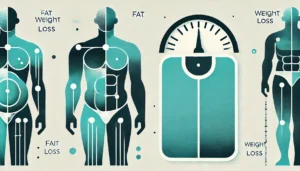
Many beginners use the terms fat loss and weight loss as if they mean the same thing. In reality, they are different—and understanding the difference can save you a lot of frustration.
On this page14 sections
This article explains what fat loss and weight loss really mean, why the difference matters, and which one you should focus on.
In one sentence: weight loss is a smaller number on the scale, which can come from fat, muscle, water, glycogen or emptied bowels; fat loss is a reduction in body fat specifically. A 3 kg drop on the scale can be almost entirely fat, or almost entirely water — the scale cannot tell you which, and that is the whole problem this article addresses.
Updated 26 November 2026: the two definition sections were rewritten around measured body composition rather than description, and the exercise section now carries the trial numbers instead of general advice.
Key Takeaways
- Weight loss is one number; fat loss is a change in body composition. They are not interchangeable.
- Roughly a quarter to a third of the weight lost on a standard calorie-restricted diet comes from lean tissue—not fat.
- Waist-based measures predict mortality risk better than the scale alone.
- Short-term body-composition wins can be lost within 18 months if the habits do not stick.
- Combining diet with training—especially resistance training—reduces fat while protecting lean mass, strength and function.
What Is Weight Loss?
Weight loss simply means a decrease in the number on the scale. That number includes everything in your body, such as:
- Body fat
- Muscle mass
- Water weight
- Food inside your digestive system
This is why your weight can change quickly from day to day. A drop on the scale does not always mean you lost fat.
The list above is why a single weigh-in cannot answer the question people ask it. Body weight is the sum of everything, and most of it can move within 24 hours without any fat being gained or lost: sodium and fluid balance, the carbohydrate and water stored in muscle and liver, the phase of the menstrual cycle, a hard training session that leaves tissue holding fluid for repair, what is still in the digestive tract, even a long flight. A kilogram-scale change overnight is usually one of those, not fat.
That does not make the scale useless — it is cheap, repeatable, and when you average it weekly it tracks energy balance better than any wearable. The mistake is treating one reading as a verdict on a week of effort. Use the number as a data point in a trend, which is exactly what the tracking section further down sets up.
What Is Fat Loss?
Fat loss refers specifically to reducing the amount of body fat you carry. This is what most people actually want when they say they want to “lose weight.”
Fat loss happens when your body uses stored fat for energy, usually through a consistent calorie deficit.
The distinction is not academic, and there is a clean way to see it. A meta-analysis of diet-induced weight loss grouped people by whether they exercised and compared the composition of what they lost. Total weight loss and total fat loss were almost identical across groups — about 10 kg of weight and 8 kg of fat. But the share of that loss coming from fat-free mass was roughly halved by exercise: 28% in diet-only men versus 13% in diet-plus-exercise men, and 24% versus 11% in women (Ballor & Poehlman, International Journal of Obesity, 1994). Same scale outcome, different body.
How much lean tissue you lose is also not fixed. A systematic review of 26 diet and behaviour cohorts plus 29 bariatric-surgery cohorts found that the proportion of weight lost as fat-free mass rose with the degree of calorie restriction (r² = 0.31, p = 0.006), fell when exercise was added in three randomised trials, and differed by surgical procedure (Chaston et al., International Journal of Obesity, 2007). In other words: the composition of your weight loss is something your strategy influences, which is why the plan matters more than the target number.
If you are new to this concept, start with this foundational guide:
Why the Scale Can Be Misleading
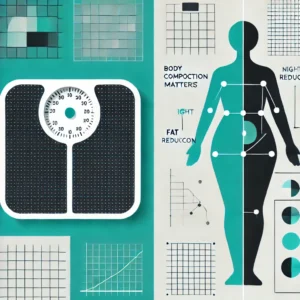
Beginners often rely only on the scale, which can be discouraging. You might lose fat but see little or no change in body weight.
- You may lose fat while gaining muscle
- Water retention can hide fat loss
- Hormones and sodium intake affect scale weight
This is why fat loss progress should be measured with more than just a scale.
A high-sodium meal, a jump in carbohydrate intake, a bad week of sleep, a new training programme or the week before a period can each shift body weight by a kilogram or more and shift it back again. None of those kilograms was fat. The rule that survives all of it: weigh under the same conditions most mornings, average the week, and judge that average against the one from four weeks ago — with a monthly waist measurement and photos every four to six weeks.
What Actually Comes Off When the Scale Drops
This is where the two terms stop being academic. A study in Obesity analysed body-composition scans before and after 9 to 12 weeks of calorie restriction in 43 men and 97 women, who lost an average of about 10.8% of their starting weight.
Not all of that loss was fat. The share of weight lost as lean soft tissue was significantly larger in men (about 0.33 versus 0.25 of the total), and women lost about 2.2 kg of fat-free mass against roughly 3.9 kg in men. Interestingly, bone mineral content rose slightly, which meant total fat-free mass fell less than lean soft tissue alone—one reason DXA scans can be easy to misread. The authors present these patterns as guidance for interpreting body-composition changes in the era of new weight-loss medications.
The practical translation: on a typical calorie-restricted diet, roughly a quarter to a third of what you lose is lean tissue. That is normal, it is not a failure, and it is the reason “fat loss” is a better goal than “weight loss”—the lean part is the part you want to keep.
Older adults: the same rule, higher stakes
A trial in Nutrition & Diabetes followed 24 older adults (aged 65–79) who completed a 5-month program of either resistance training alone or resistance training plus calorie restriction. The combined group lost 7.1 kg during the intervention—about 74% of it fat and 26% lean mass.
Eighteen months later, all of the combined group had regained weight (an average of 4.8 kg). By that point, total fat mass and thigh fat volumes had increased while thigh muscle volume had decreased, and the body-composition advantage over the training-only group had largely disappeared. The message is uncomfortable but useful: short-term body-composition wins do not survive on their own. They need the habits to stay.
Does the fat always come back first?
The idea that dieting makes you fatter has a real basis in physiology, but it is not a universal rule. A modelling paper in the International Journal of Obesity formalised the concept of “fat overshooting”—regaining more fat than you lost—working from a re-analysis of the classic Minnesota Starvation Experiment. Their model suggests fat overshoot is driven by fat and lean tissue recovering at different speeds, with fat recovering faster, and that it is more likely in people who were already lean before dieting.
A systematic review and meta-analysis in Obesity Reviews looked for it in 74 studies of weight-cycling athletes and found something more reassuring: after a weight-loss episode, body weight and fat-free mass generally returned to where they started, and there was no consistent evidence of fat overshooting. In strength-sport athletes—who typically have the longest lose-and-regain cycles—fat mass did not fully return to its pre-diet level.
So: the risk is real in theory and worth respecting, especially if you are already lean, but the evidence does not support the fatalistic claim that every diet makes you fatter. Rapid, repeated, poorly planned cycles are the thing to avoid.
Why Losing Weight Is Not Always Losing Health Risk
Where fat sits matters as much as how much of it there is. A cohort analysis of 3,081 U.S. adults in the NHANES dataset examined the weight-adjusted waist index—essentially waist circumference relative to body weight—and found it positively associated with all-cause mortality (hazard ratio 1.94) and cardiovascular mortality (hazard ratio 1.85) across increasing quartiles. It also outperformed BMI, waist circumference and body weight in predicting those outcomes.
That is the strongest argument for measuring your waist and not only weighing yourself. Two people can share the same weight and BMI and carry very different risk. For adults, keeping waist measurement on a monthly record—same time of day, tape at the level of the navel, relaxed breath—gives you a signal the scale cannot.
When losing weight costs you muscle
When fat accumulates alongside low muscle mass, the combination has a name: sarcopenic obesity. A 2026 systematic review and meta-analysis of 34 observational studies published in Frontiers in Nutrition estimated that about 24% of adults with diabetes have sarcopenic obesity (95% confidence interval 19–29%), with higher rates in women (28%) and in community-dwelling patients (29%). The factors it reports sit on both sides of the problem: higher body-mass and fat-mass indices, but also low muscle strength, low physical activity and poorer glycaemic control.
This is the clearest case for treating fat loss and weight loss as different goals. If your strategy shrinks the scale by shrinking muscle and strength too, it is moving you toward the outcome you were trying to avoid.
What Protects Lean Mass While You Lose Fat
An overview of 32 systematic reviews in Frontiers in Nutrition compared combined diet-and-activity programs against diet-only and exercise-only approaches in people with overweight or obesity.
Combined programs generally did better for weight, BMI, waist circumference, fat mass and cardiorespiratory fitness. The most durable results showed up in programs lasting at least 6 to 12 months with frequent structured contact, supervision and resistance-inclusive exercise. In older adults specifically, combined programs reduced fat mass while preserving lean mass, strength and function. Some metabolic benefits appeared even without extra weight loss. The authors flagged that overall review quality was mixed—only about a third were rated high quality—so the direction is clear rather than the exact size of the effect.
Three practical implications: lift something heavy a few times a week, keep protein high enough, and lose at a rate you can sustain rather than the fastest rate you can survive.
If you want to change shape while the scale barely moves:
Fat Loss vs Weight Loss: Key Differences
- The goal. Weight loss targets a number on a scale; fat loss targets fat mass while keeping muscle, strength and function
- The measurement. Weight loss needs only a scale; fat loss needs a trend (weekly average), a tape measure, photos and a strength log
- What comes off. On diet alone, roughly a quarter to a third of the weight lost is lean tissue; with resistance training and adequate protein, that share roughly halves
- The rate. Weight can drop 1–2% of body mass per week on a hard diet; fat loss that protects lean mass runs at about 0.5–1% per week, slower if you are lean or over 60
- The failure mode. Weight loss fails by rebound — the weight returns and the lean mass does not; fat loss fails by impatience, because the scale barely moves for weeks
For long-term results, fat loss should always be the main goal.
Which One Should Beginners Focus On?
Beginners should focus on fat loss, not just weight loss. This approach leads to better health, better body shape, and results that last.
The reason is timing. Beginners have the most room to gain muscle and the most fat available to fuel it, so a beginner who lifts, eats enough protein and holds a small deficit can improve body composition while the scale moves slowly. A beginner who simply eats less gets a faster scale result and gives back more of it as lean tissue — the pattern the diet-only groups above show.
In practice, “focus on fat loss” means three decisions rather than one: a deficit of roughly 10–20% below maintenance, protein at about 1.6–2.2 g per kg of body weight per day, and resistance training two to three times a week that gets progressively harder. The numbers behind the protein target are in protein intake for body recomposition.
To support fat loss:
- Follow a small, sustainable calorie deficit
- Eat balanced meals
- Move your body consistently
You can start with a simple nutrition plan here:
How Exercise Fits Into Fat Loss
Exercise helps preserve muscle, burn calories, and improve overall health. It supports fat loss but does not need to be extreme — and its most important job is not burning calories. It is deciding what kind of tissue you lose.
A controlled 16-week diet study makes that concrete. Sixteen postmenopausal women with overweight (average age 68, BMI 29) ate 500 kcal per day below requirement and 1.0 g of protein per kg per day. Half added resistance training three times a week; half stayed sedentary. Body mass fell similarly (5.8 kg sedentary versus 5.0 kg training) and fat loss was similar (4.1 versus 4.7 kg). The difference was lean mass: the sedentary group lost 1.6 kg of fat-free mass, while the training group’s fat-free mass was unchanged (−0.3 kg) (Campbell et al., Obesity, 2009). Same deficit, same fat loss, different body at the end of it.
The dose does not need to be heroic. WHO guidance for adults is 150–300 minutes of moderate activity per week plus muscle-strengthening work on at least two days — and the resistance part is the part that protects lean mass while you diet.
For busy beginners, short workouts are enough:
The Same Scale Weight, Different Bodies: What the Trials Show
The cleanest way to see the difference is to look at interventions that leave body weight almost unchanged while changing body composition. Resistance training during a diet is the best-studied example.
A 2025 systematic review screened 6,934 records and pooled 25 studies comparing diet-only weight loss with diet plus resistance exercise in adults with overweight or obesity. Adding resistance exercise had no significant effect on body mass (mean difference −0.32 kg, p = 0.35). Yet it protected fat-free mass (standardized mean difference 0.40, p = 0.0003, moderate certainty) and increased fat loss (SMD −0.36, p < 0.00001, high certainty), with a large gain in muscular strength (SMD 2.36). Participants in the diet-only groups lost anywhere from 0.7 kg to 20.4 kg, so the pooled scale difference hid very different body-composition outcomes (Binmahfoz et al., BMJ Open Sport & Exercise Medicine, 2025).
The same pattern appears with very-low-energy diets. A 2025 meta-analysis of 5 studies (241 participants) found that adding exercise to a very-low-energy diet improved fat-free mass retention by 0.83 kg (95% CI 0.17–1.49) compared with the diet alone (Lowrie et al., Obesity Research & Clinical Practice, 2025). On the scale, that difference is small; in how you look and function at 60, it is not.
How fast you lose weight changes what you lose
Rate matters too. A meta-analysis comparing gradual with rapid weight loss found that gradual loss produced about 1 kg more fat loss and a 0.83 percentage-point greater drop in body fat percentage, while preserving resting metabolic rate by roughly 407 kJ (about 97 kcal) per day. Fat-free mass loss did not differ between the two approaches (Ashtary-Larky et al., British Journal of Nutrition, 2020).
That is the most useful practical finding in this article: two people can lose the same 8 kg, and the one who lost it slowly, with resistance training, ends up with less fat and more muscle. The scale reports the same number for both.
Weight Cycling: Not the Villain It Is Made Out to Be
If losing weight means losing some muscle, a natural worry follows: does losing and regaining repeatedly — “yo-yo dieting” — damage body composition and metabolism permanently? That claim is repeated constantly and is worth checking against the current evidence.
A 2026 review in The Lancet Diabetes & Endocrinology evaluated human and animal studies on weight cycling and concluded that the evidence does not support a causal link between weight cycling per se and adverse effects on body weight, body composition, energy expenditure, or metabolic health. The apparent harm in observational studies is better explained by longer cumulative exposure to obesity, which is what usually accompanies repeated cycles (Magkos & Stefan, 2026).
Two honest caveats. First, some modelling and athlete data do suggest regain can restore fat faster than lean tissue in specific circumstances (Jacquet et al., 2020; Bagot et al., 2024) — those studies describe mechanisms, not proof that a single regain ruins you. Second, “not proven harmful” is not the same as “harmless”: each cycle still costs you the lean mass you lost on the way down, which is why protecting muscle during the loss phase matters more than fearing the regain.
How to Track Fat Loss Instead of Weight Loss
Track four things, once a month, and you will always know more than the scale alone can tell you:
- Waist circumference. The measurement most clearly linked to risk in the mortality data. Same technique every time.
- Weekly average weight. Useful for spotting the trend, useless when read one day at a time.
- Strength or performance. If your lifts or your pace are holding while the scale drops, the loss is coming mostly from fat.
- Photos and how clothes fit. Slow, boring, and by far the most convincing evidence over a year.
A rate of roughly 0.5–1% of body weight per week is a reasonable target for most people, with the slower end better if you are already lean or over 60. Slower is not lazy here—it is how lean mass is protected.
Once you shift your focus from weight loss to fat loss, your journey becomes clearer and far less frustrating. If you are starting from zero, the beginner fat loss guide puts the sequence in order; for food, see the foods that make a deficit easier to hold; and if your progress stalls without an obvious reason, check sleep before cutting calories again.
Frequently Asked Questions
Can I lose fat without losing weight?
Yes, and the trials show it directly. In a 2025 review of 25 studies, adding resistance exercise to a diet did not change body mass compared with diet alone (−0.32 kg, p = 0.35) while producing more fat loss and better fat-free mass retention. If you gain muscle while losing fat, the scale can stay roughly flat while your waist, photos and clothes tell a different story. This is the whole point of body recomposition, and it is most common in beginners, in people returning to training, and in people with more body fat to lose.
How do I know whether I am losing fat or muscle?
Three cheap signals, read together: your waist shrinks while weekly average weight moves slowly or not at all; your strength in two or three basic lifts holds or improves; and your clothes fit differently in the same week the scale stalls. If the scale is dropping fast, your strength is falling and your waist is unchanged, the loss is probably including more lean tissue than you want — slow the deficit and keep training.
Body-fat scales (bioimpedance) are convenient but sensitive to hydration, food and time of day, so use the same conditions each time and treat single readings as noise. DXA is more reliable but still has methodological limits when weight is changing rapidly; a 2025 critical analysis of DXA-measured changes during voluntary weight loss discusses those limits in detail (Heymsfield et al., 2025).
Does weight cycling ruin your metabolism?
Repeated dieting is widely said to cause permanent metabolic damage. The current evidence does not support that. A 2026 review of human and animal studies concluded there is no causal link between weight cycling per se and adverse effects on body weight, body composition, energy expenditure or metabolic health, and that the harms seen in observational data are better explained by longer cumulative exposure to obesity (Magkos & Stefan, The Lancet Diabetes & Endocrinology, 2026). What a regain does cost you is the lean mass lost on the way down, which is a reason to protect muscle during the loss phase — not a reason to avoid ever trying again.
How much of my weight loss will be muscle?
In a calorie-restricted diet without training, roughly a quarter to a third of the weight lost comes from lean tissue. In a DXA analysis of 140 adults losing about 10.8% of body weight, the lean share was larger in men than in women. Resistance training, adequate protein and a moderate rate of loss all reduce that share—you cannot eliminate it entirely.
Is it possible to lose weight but still be unhealthy?
Yes—that is exactly what sarcopenic obesity describes: excess fat alongside low muscle mass. Pooled data suggest around 24% of adults with diabetes fall into this category. It is also why waist-based measures predict mortality better than weight alone in cohort data.
Why did I regain weight and end up with more fat than before?
Fat overshooting is a modelled risk, and it appears more likely in people who were already lean (or underweight) before dieting, partly because fat and lean tissue recover at different speeds. In studies of athletes who repeatedly lose and regain weight, body weight and lean mass generally returned to baseline, with no consistent fat overshoot. The habits after the diet matter more than the diet itself.
Should I use a scale, a tape measure or a body-fat scan?
Use the scale for the trend, the tape measure for risk and shape, and photos for reality. Body-fat scans such as DXA are useful but need care in interpretation—bone mineral changes and hydration can shift the numbers, as the DXA analysis above shows.
How fast should I lose fat?
About 0.5–1% of body weight per week for most people. The leaner, older or more trained you are, the slower the better, because lean mass is hardest to protect when the deficit is aggressive and the loss is fast.
Keep reading
- Signs you are losing fat
- How long does fat loss take
- Why you are not losing fat
- Control portions without counting calories
- Walking for fat loss
Sources
- NHS. Healthy weight — Live Well (weight management and waist measurement guidance).
- NHS. How to eat a balanced diet — Live Well (the Eatwell approach to balanced meals).
- World Health Organization. Obesity and overweight — fact sheet (definitions of overweight and obesity, and health consequences).
- Heymsfield SB et al. Critical analysis of dual-energy x-ray absorptiometry-measured body composition changes with voluntary weight loss. Obesity, 2025.
- Chmelo EA et al. Legacy effects of short-term intentional weight loss on total body and thigh composition in overweight and obese older adults. Nutrition & Diabetes, 2016.
- Jacquet P et al. How dieting might make some fatter: modeling weight cycling toward obesity from a perspective of body composition autoregulation. International Journal of Obesity, 2020.
- Bagot S et al. Weight regain, body composition, and metabolic responses to weight loss in weight cycling athletes: A systematic review and meta-analyses. Obesity Reviews, 2024.
- Gu Z et al. Prevalence of sarcopenic obesity in adult patients with diabetes and associated factors: a systematic review and meta-analysis. Frontiers in Nutrition, 2026.
- Yang W et al. The association between weight-adjusted waist circumference index and risks of cardiovascular and all-cause mortality: a retrospective analysis based on the NHANES database. Annals of Medicine, 2026.
- Salem A et al. Combined diet and physical activity effects on health-related outcomes in people with overweight or obesity: an overview of systematic reviews. Frontiers in Nutrition, 2026.
- Binmahfoz A et al. Effects of resistance exercise during dietary weight loss on body composition and muscular strength in adults with overweight and obesity: systematic review and meta-analysis. BMJ Open Sport & Exercise Medicine, 2025. (25 studies from 6,934 records: body mass −0.32 kg, p = 0.35; fat-free mass SMD 0.40, moderate certainty; fat mass SMD −0.36, high certainty.)
- Lowrie M et al. Exercise impact on fat-free mass reduction during very low energy diet-induced weight loss in adults: a systematic review and meta-analysis. Obesity Research & Clinical Practice, 2025. (5 studies, 241 participants: fat-free mass retention improved by 0.83 kg, 95% CI 0.17–1.49.)
- Ashtary-Larky D et al. Effects of gradual weight loss v. rapid weight loss on body composition and RMR: a systematic review and meta-analysis. British Journal of Nutrition, 2020. (Gradual loss: about 1 kg greater fat loss, 0.83 percentage-point greater body-fat reduction, resting metabolic rate preserved by ~407 kJ/day; no difference in fat-free mass.)
- Ballor DL, Poehlman ET. Exercise-training enhances fat-free mass preservation during diet-induced weight loss: a meta-analytical finding. International Journal of Obesity, 1994;18(1):35–40. (Same weight and fat loss across groups; fat-free mass share 28% diet-only vs 13% diet-plus-exercise in men, 24% vs 11% in women.)
- Chaston TB, Dixon JB, O’Brien PE. Changes in fat-free mass during significant weight loss: a systematic review. International Journal of Obesity, 2007;31(5):743–750. (26 diet cohorts + 29 surgical cohorts: proportion lost as fat-free mass rises with the degree of calorie restriction, r² = 0.31; exercise reduced it in three randomised trials.)
- Campbell WW, Haub MD, Wolfe RR, et al. Resistance training preserves fat-free mass without impacting changes in protein metabolism after weight loss in older women. Obesity, 2009;17(7):1332–1339. (16 postmenopausal women, 500 kcal/day deficit for 16 weeks: fat-free mass −1.6 kg sedentary vs −0.3 kg with resistance training; fat loss similar.)
- World Health Organization. Physical activity — fact sheet (150–300 minutes of moderate activity per week plus muscle-strengthening activity on at least two days for adults).
- Magkos F, Stefan N. Is weight cycling clinically harmful? The Lancet Diabetes & Endocrinology, 2026. (Review of human and animal studies: no causal link between weight cycling per se and adverse effects; apparent harms better explained by cumulative obesity exposure.)
This article is general information for healthy adults, not medical advice. If you have diabetes, heart disease, kidney or liver disease, a history of an eating disorder, or you are pregnant or breastfeeding, get individual advice from a qualified clinician before starting a weight-loss or fat-loss program. Unexplained weight loss, persistent fatigue, or rapid loss of strength should be assessed by a doctor.