How to Control Portions Without Counting Calories
Counting calories can be helpful, but it’s not for everyone. Many beginners find calorie tracking stressful, time-consuming, or difficult to maintain.
The good news is that fat loss is still possible without counting calories—by learning how to control portions effectively.
This article shows simple, practical ways to manage portions without numbers or apps.
Why Portion Control Matters for Fat Loss
Fat loss depends on long-term calorie balance. Portion size plays a huge role in how many calories you consume—even when eating healthy foods.
This is why understanding portion control is one of the most powerful fat loss skills.
If you want to understand the nutrition basics first, start here:
The Plate Method (Beginner-Friendly)
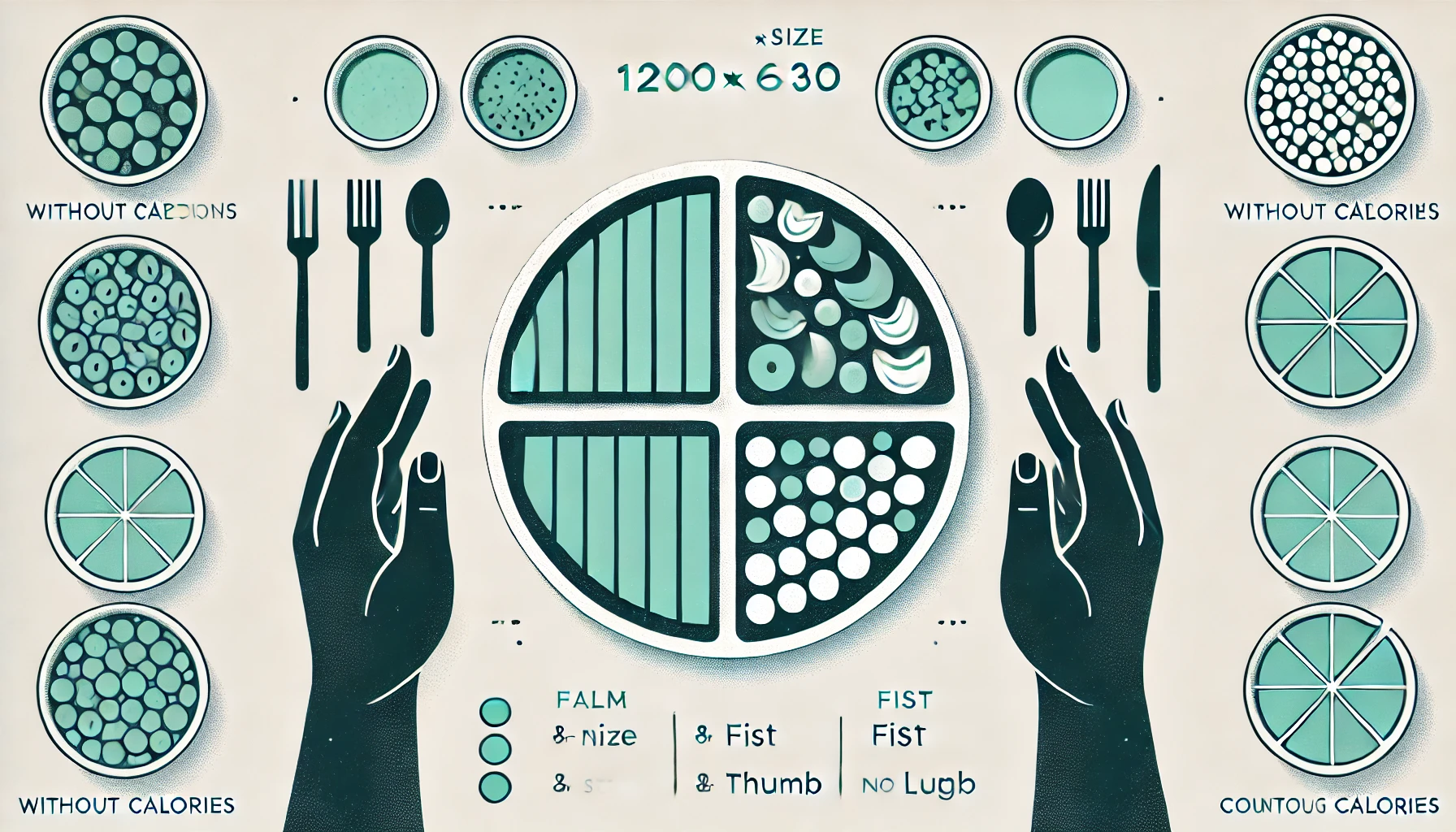
The plate method is one of the simplest ways to control portions—no measuring required.
- ½ plate: vegetables
- ¼ plate: protein
- ¼ plate: carbohydrates
This structure naturally limits calories while keeping meals satisfying.
You can see examples of fat loss-friendly foods here:
Use Your Hands as Portion Guides
Your hands are a practical portion tool you always carry with you.
- Palm: protein portion
- Fist: vegetables
- Cupped hand: carbohydrates
- Thumb: fats
This method works well at home and when eating out.
Slow Down Your Eating
Eating too quickly often leads to overeating.
- Put your fork down between bites
- Chew thoroughly
- Pay attention to fullness cues
Slower eating improves portion awareness.
Plan Snacks Wisely
Unplanned snacks often lead to excess calories.
Choosing structured snacks can support portion control:
Planned snacks reduce impulsive eating.
Common Portion Control Mistakes
- Eating directly from large packages
- Ignoring liquid calories
- Overeating “healthy” foods
- Skipping meals and overeating later
Awareness is more important than perfection.
How Portion Control Fits Long-Term Fat Loss
Portion control is a skill, not a strict rule.
Combined with balanced meals and consistency, it supports sustainable fat loss.
If you want a simple structure to follow:
Key Takeaways
- Calorie counting is optional
- Portion control drives calorie balance
- Simple visual methods work well
- Consistency matters more than precision
Mastering portion control makes fat loss simpler, calmer, and more sustainable.