Sleep for Fat Loss: Why Better Sleep Helps You Lose Fat
Many people try to lose fat by eating less and exercising more—while sleeping less. Unfortunately, poor sleep can quietly sabotage fat loss.
Sleep affects hunger, energy, recovery, and decision-making. Improving sleep quality often makes fat loss easier without changing calories.
This article explains why sleep matters for fat loss and how to improve it realistically.
How Sleep Affects Fat Loss
Sleep influences hormones that regulate hunger and fullness.
- Less sleep increases hunger
- Poor sleep raises cravings for high-calorie foods
- Fatigue reduces daily movement
Even short-term sleep deprivation can affect fat loss progress.
This connects closely to lifestyle balance:
Sleep, Hunger Hormones, and Cravings
Two key hormones are affected by sleep:
- Ghrelin: increases appetite
- Leptin: signals fullness
Poor sleep raises ghrelin and lowers leptin—making it harder to feel satisfied.
This often leads to late-night snacking and emotional eating.
Related topic:
Sleep and Recovery From Training
Muscle recovery and adaptation happen during sleep.
- Better recovery improves training performance
- Poor sleep increases injury risk
- Fatigue reduces workout consistency
Without adequate sleep, training feels harder and less effective.
Recovery basics:
How Much Sleep Do You Need?
Most adults need between 7–9 hours of sleep per night.
- Less than 6 hours increases fat loss resistance
- Consistent sleep timing matters
- Quality matters as much as quantity
Consistency is more important than perfection.
This mindset helps:
Simple Sleep Habits That Support Fat Loss
- Go to bed and wake up at similar times
- Reduce screen exposure before sleep
- Create a relaxing pre-bed routine
- Limit caffeine late in the day
Small adjustments can significantly improve sleep quality.
Evening routines support habit building:
Sleep, Stress, and Fat Loss
Poor sleep increases stress levels, creating a negative cycle.
- Higher stress affects food choices
- Fatigue reduces coping capacity
- Recovery suffers
Improving sleep often reduces stress naturally.
We’ll cover stress in detail next:
Key Takeaways
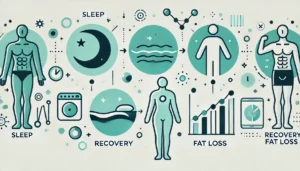
- Sleep strongly affects fat loss
- Poor sleep increases hunger and cravings
- Recovery depends on sleep quality
- Small sleep improvements compound over time
Improving sleep is one of the simplest ways to support fat loss—without doing more.